Email Marketing Lists: How to Organize and Follow Up with Every Audience
Email marketing lists are often treated like a simple collection of contacts—but that’s exactly why most agents struggle to get results. When everyone receives the same message, engagement drops, interest fades, and opportunities get missed.
If you want better response, stronger connections, and more conversions, the solution isn’t a bigger list—it’s a smarter one. This guide shows how to organize your lists and follow up with purpose.
What Email Marketing Lists Really Are
Email marketing lists aren’t just names in a database. They’re groups of people with different goals, timelines, and motivations.
When you treat them all the same, your message becomes irrelevant. When you separate them with purpose, your message becomes timely—and that’s when people start paying attention.
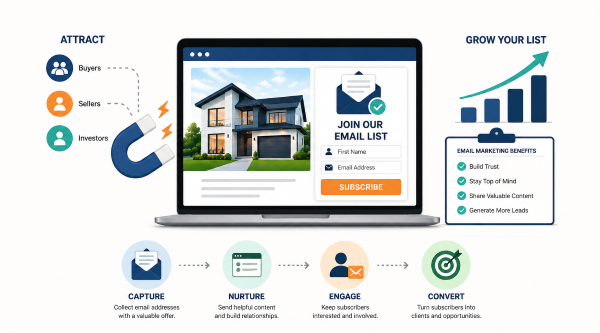
If you’re still building your foundation, start here: How to Build an Email List
Why Most Email Marketing Lists Fail
One Message Sent to Everyone
Buyers, sellers, past clients, and cold leads all get the same email. It doesn’t resonate with anyone.
No Clear Follow-Up Strategy
Emails go out randomly, with no sequence or intent behind them.
No Segmentation From Day One
Leads come in—but they’re never categorized, so everything becomes cluttered and confusing.
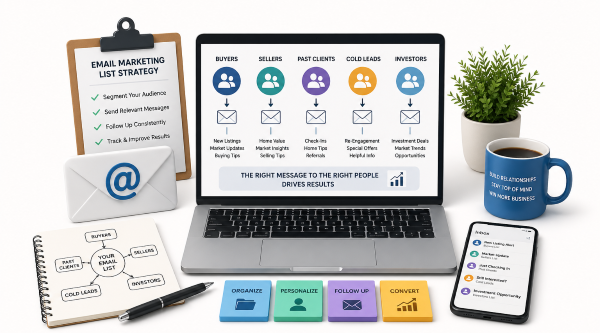
The 5 Core Email Marketing Lists You Should Have
Buyers List
Active or future homebuyers looking for direction and opportunities.
Sellers List
Homeowners who need pricing insight, timing strategy, and confidence.
Past Clients List
Your strongest referral source—if you stay in touch.
Cold or Unresponsive Leads List
Leads who haven’t engaged yet—but still have potential.
Investor or Niche List
Optional, but powerful when messaging is tailored.
What to Send Each List (This Is Where Most Get It Wrong)
Buyers
Listings, opportunities, and confidence-building tips.
Sellers
Pricing insights, market updates, and positioning strategy.
Past Clients
Check-ins, value, and subtle referral prompts.
Cold Leads
Curiosity-driven re-engagement messages.
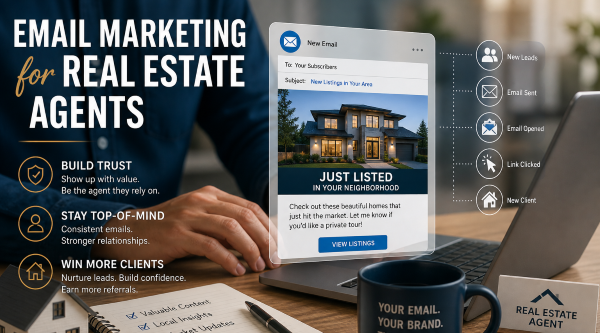
See how these messages come together in real campaigns: Email Marketing for Real Estate Agents
Want plug-and-play ideas you can use immediately? Real Estate Email Marketing Ideas
How to Follow Up Without Burning Your List
Timing Beats Frequency
You don’t need more emails—you need better-timed ones.
Relevance Beats Volume
One targeted message outperforms five generic ones.
Behavior Should Guide You
Opens and clicks tell you who’s paying attention—follow up accordingly.
For a ready-made system, download the Real Estate Email Marketing Jump Start Kit
Email Marketing Lists Examples (Simple and Actionable)
New Buyer Lead
Added to Buyer List → receives a short sequence → followed by listings.
Cold Lead
Moved to re-engagement list → tested with curiosity-driven email.
Past Client
Receives periodic value emails and referral prompts.
You can also combine this with tools like the Real Estate Farming Tools Checklist to stay consistent with outreach.
Common Email Marketing List Mistakes (and How to Fix Them)
Sending the Same Email to Everyone
This is the fastest way to lose attention. Buyers don’t care about seller tips. Sellers don’t care about listings.
Fix: Segment your email marketing lists from day one. Even a simple split between buyers, sellers, and past clients makes your messaging instantly more relevant.
Letting Your Lists Go Stale
Contacts sit untouched for months, then suddenly get a random email. It feels disconnected—and it gets ignored.
Fix: Create a basic follow-up rhythm. Weekly, biweekly, or monthly—just stay consistent so your audience remembers who you are.
Ignoring Engagement Signals
Opens and clicks are telling you something—but most agents never act on that data.
Fix: Treat engagement like a conversation. If someone opens or clicks, follow up. If they don’t, adjust your message or move them to a different list.
Overcomplicating the System
Too many lists. Too many tags. Too much confusion. Nothing gets used consistently.
Fix: Keep it simple. Start with 3–5 core email marketing lists and expand only when needed. Clarity beats complexity every time.
No Clear Purpose Behind Emails
Emails go out “just because”—with no goal, no direction, and no reason for the reader to act.
Fix: Every message should have a purpose: inform, prompt, re-engage, or convert. When your emails have intent, your results improve.
Avoid these mistakes, and your email marketing lists stop feeling like a chore—and start working like a system.
Email Marketing Lists Quick Setup Checklist
Use this quick checklist to organize your email marketing lists, segment your audience, and create a follow-up system that actually gets responses.
- Segment your email marketing lists into buyers, sellers, past clients, and cold leads
- Create separate lists inside your email platform for each audience
- Match each list with targeted messaging based on their needs and timing
- Set a consistent follow-up schedule (weekly, biweekly, or monthly)
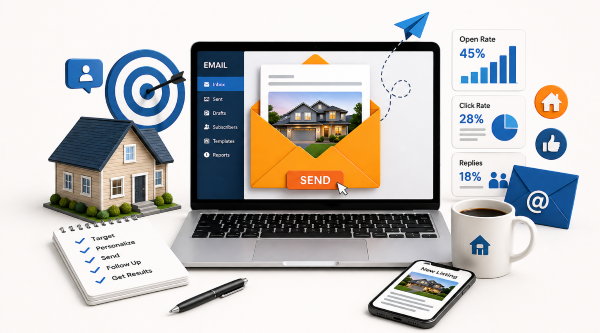
- Track opens, clicks, and replies to guide your next move
- Re-engage inactive contacts with curiosity-driven emails
- Keep your system simple so you actually use it consistently
Pro Tip: Email marketing lists don’t need to be complex—just organized. Clarity creates consistency, and consistency creates results.
The Real Shift: From Lists to Conversations
Stop Thinking in Lists
Lists are just the structure.
Start Thinking in People
Every contact has a reason they signed up—and a reason they haven’t responded yet.
When your message matches their mindset, engagement rises—and so do your results.
Email Marketing Lists — FAQ
What is an email marketing list?
It’s a segmented group of contacts organized by interest, behavior, or stage in the buying or selling process.
How many email lists should I have?
Start with 3–5 core lists (buyers, sellers, past clients, cold leads). Expand only when needed.
How often should I email my list?
Consistency matters more than frequency. Weekly or biweekly works well when content is relevant.
Why aren’t my emails getting responses?
Most likely due to poor segmentation or generic messaging. Relevance is the key driver of engagement.
Keep Building Your Email Strategy
Email marketing lists aren’t the problem.
They’re the leverage.
Organize them.
Segment them.
Work them.
Done right they don’t just sit there.
They convert.
Home Page > Email Marketing for Real Estate Agents >> Email Marketing Lists
🔥Top Pages April 2026

💌 Real Estate Marketing Talk Home Page→Timely Strategies and Resources for Agents
| Buyers, Sellers and Investors, Too!
🏷️ Real Estate Marketing Slogans →Magnetic Taglines That Pull Clients Toward You Instantly
🎯Real Estate Postcards →
Ideas that turn everyday mail into real estate magic.
📬Real Estate Agent Directory →
Free Listings and Profile Pages for Agents
📝 Real Estate Marketing Talk Blog → Ideas That Flip the Script on Agent Visibility
🚪 Your Gateway to Targeted Insights

👔 For Agents →
Branding tips, lead gen strategies & marketing tools to grow your business
🏡 For Buyers → Smart buying guides, market insights & negotiation tips for your next move
📦 For Sellers → Listing prep, pricing strategies & proven tactics to sell fast and profitably
💰 For Investors → ROI-focused content, property analysis tools & market trend breakdowns